Blogs
We share with you the latest industry trends, try to solve all your questions about flexible packaging machines and printing machines as well. Read our blogs to keep abreast of what’s new in the industry and in Zonbon.

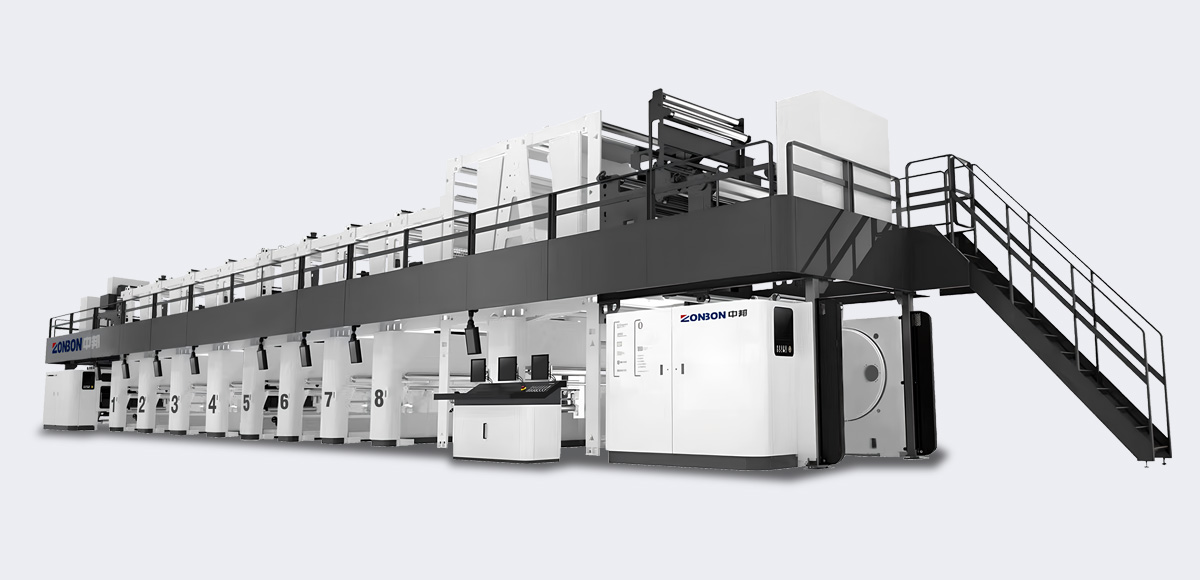
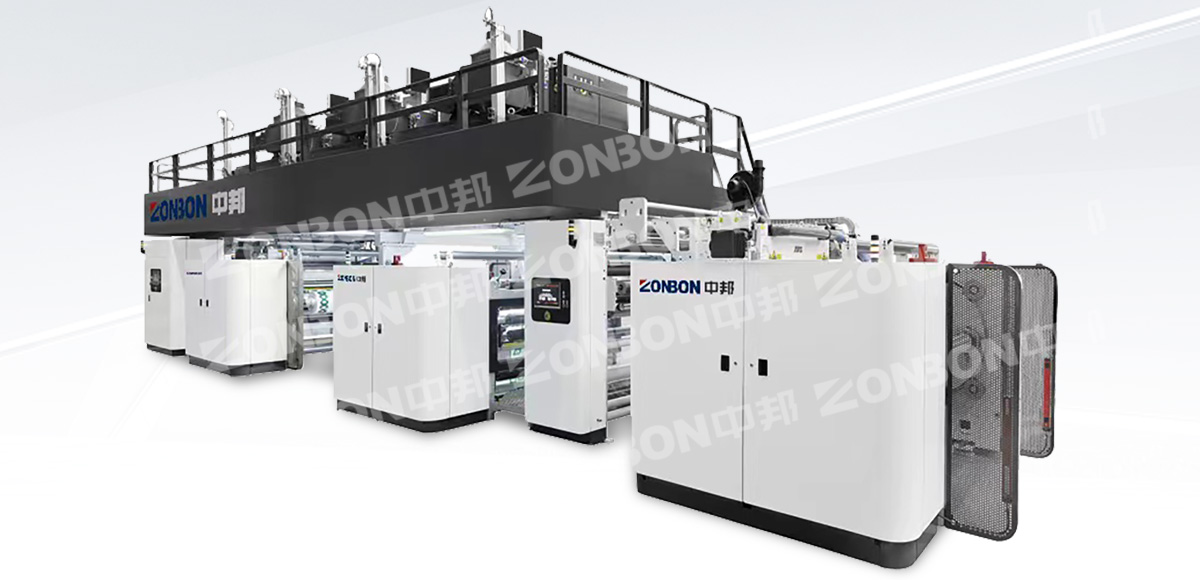
The gravure printing press, as a core piece of equipment in the high-end printing machinery sector, holds an irreplaceable position in packaging, publication, and specialty printing due to its exceptional print quality and stable production performance. The core of this printing process lies in its unique plate structure—the image and text areas are recessed below the plate surface. The ink transfer volume is controlled by the depth of the cells, enabling rich tonal reproduction and accurate color rendition.
From a technical principle perspective, during operation, ink fills the cells of the gravure cylinder. After a doctor blade removes excess ink from the surface, the ink within the cells is transferred to the substrate under the high pressure of the impression cylinder (typically reaching 20-50 kg/cm²). This transfer mechanism gives gravure products significant advantages such as a thick ink layer, high color saturation, and strong print durability (capable of millions of impressions), making it particularly suitable for long-run, high-quality printing needs.
Fully automatic high-speed gravure presses (maximum speed up to 450 m/min)
Semi-automatic medium-speed models (200-300 m/min)
Manual low-speed specialized models (50-150 m/min)
Flexible packaging gravure presses (mainly printing film materials like PE, PP, PET)
Paper gravure presses (for high-end cigarette packs, liquor labels, and other paper products)
Specialty gravure presses (e.g., for building material transfer printing, decorative material printing)
Gravure printing press prices vary extremely widely, ranging from several hundred thousand to tens of millions of RMB, primarily depending on equipment specifications, configuration, and brand value.
Entry-level equipment (100,000 -300,000 USD)
Web width: 600-800mm
Color units: 4-6 colors
Speed: 80-120 m/min
Typical applications: Small label printing, short-run packaging
Mid-range professional equipment (150,000 -1million USD)
Web width: 800-1300mm
Color units: 6-8 colors
Speed: 150-250 m/min
Additional configurations: Automatic register control, online inspection
Typical applications: Medium-sized packaging companies, publication printing
High-end production lines (1-4million USD)
Web width: 1300-1700mm
Color units: 8-12 colors
Speed: 300-450 m/min
Full automation: Automatic roll change, intelligent drying systems
Typical applications: Large flexible packaging companies, multinational printing groups
Printing Width: Each 100mm increase in width typically raises the equipment price by 15-20%. For example, a 1000mm width model is about 30% more expensive than an 800mm model.
Number of Color Units: Each additional printing unit increases cost by approximately 20,000 - 30,000 USD (mechanical part) + 10,000 - 20,000 USD (electrical control).
Automation Level:
Basic automatic register system: 40,000 - 60,000 USD
Fully automatic register system: 70,000 - 160,000 USD
Robotic automatic roll change system: 100,000 -200,000 USD
Drying System:
Electric heating drying: 20,000 - 40,000USD per color unit
Infrared drying: 30,000 - 50,000 USDper color unit
UV curing system: 60,000 - 90,000 USD per color unit
Brand Premium:
Top European brands (e.g., Bobst, Cerutti): 30-50% premium
Japanese brands (e.g., Fuji, Sumitomo): 20-35% premium
Chinese first-tier brands (e.g., Ruian Zhongbang, Wenzhou Zhongming): Relatively affordable prices
European High-end Brands
Bobst (Switzerland): 2 -4million USD
(8-color, 1300mm model)
Cerutti (Italy): 1,8 -3million USD
Uteco (Italy): 1,3 -3million USD
Windmöller & Hölscher (Germany): 1,4 -3million USD
Japanese Brands
Fuji Machinery: 1,1 -2,5million USD
Sumitomo Heavy Industries: 1 -2,3million USD
Equipment Features:
Use of high-precision gears (DIN Grade 3 standard)
Equipped with advanced shaftless drive systems (servo motor direct drive)
Standard closed-loop automatic register (accuracy ±0.01mm)
Intelligent production management system (MES interface)
First-tier Chinese Domestic Brands
Zhejiang Ruian Zhongbang Printing machine & Packaging Machinery: 100,000 -400,000 USD
Wenzhou Zhongming Machinery:80,000 -300,000 USD
Progress in China's equipment production:
Key components use imported parts (e.g., Bosch Rexroth servo systems)
Register accuracy reaches ±0.02mm
Energy consumption reduced by 15-20% (compared to similar imported models)
Short after-sales service response time (typically within 24 hours)
Price Comparison Case:
8-color, 1000mm width gravure press
European brand: approx. 2million USD
Japanese brand: approx. 1,3million USD
Chinese high-end: approx. 400,000 USD
Chinese standard: approx. 200,000 USD
Equipment purchase cost: Accounts for about 60-70% of total investment
Installation and commissioning fee: 5-8% of equipment price
Factory modification: 70,000 -200,000 USD (including foundation, power capacity increase)
Environmental protection facilities: 120,000 -300,000 USD(VOCs treatment system)
Energy Consumption Costs:
Electricity: 80-150 kW per hour (high-speed models)
Natural gas: 15-30 m³ per hour (hot air drying system)
Consumables Costs:
Gravure cylinder: 70 -200 USD each (depending on size and engraving process)
Ink: 30-80 RMB/kg (solvent-based), 7 -20USD/kg (water-based)
Doctor blade: 0.1 -2 USD/mm (imported material)
Maintenance Costs:
Annual maintenance: 2-3% of equipment price
Overhaul fund: Approximately 8-12% of equipment price every 5 years
Taking a Chinese-made 8-color, 1000mm gravure press (price 3million USD) as an example:
Monthly production capacity: Approx. 150 tons of film printing
Average processing fee: 1,100 USD/ton
Monthly output value: 2million USD
Direct cost proportion: Approx. 55%
Monthly gross profit: 70,000 USD
Investment payback period: Approx. 14-18 months (at full capacity production)
Mechanical Precision:
Radial runout ≤0.01mm
Axial movement ≤0.015mm
Repeat registration accuracy ≤±0.02mm
Drying Efficiency:
Solvent residue ≤5mg/m² (national standard requirement)
Drying energy consumption ratio ≤0.15 kW·h/m²
Level of Intelligence:
Remote diagnostic function
Data acquisition interface (OPC UA protocol)
Intelligent maintenance reminder system
Payment Terms:
Conventional: 30% deposit, 60% before shipment, 10% after acceptance
Financial leasing: 20-30% down payment, installment over 3-5 years
Delivery Lead Time:
Imported equipment: 8-12 months
Domestic equipment: 3-6 months
After-sales Service:
Warranty period: Typically 1-2 years
Response time: Domestic 4-8 hours, Imported 24-72 hours
Spare parts supply: Domestic immediate, Imported requires 1-3 months
Green Printing Technology:
Water-based ink application proportion increasing to 25%
VOCs reduction equipment becoming standard
Energy recovery systems saving 15-20% energy
Digital Upgrade:
Intelligent pre-register systems reducing setup time by 30%
AI defect detection accuracy reaching 99.5%
Digital twin technology used for equipment operation and maintenance
Multi-functional Integration:
Printing-laminating-slitting integration
In-line cold foil stamping, embossing processes
UV-LED curing technology becoming widespread
Demand Matching Principle:
Short-run business: Consider medium/low-speed models (investment reduced by 40%)
Long-run business: Prefer high-speed models (efficiency increased by 50%)
Cost Optimization Solutions:
Equipment financial leasing (reduces initial capital pressure)
Group procurement (volume discounts of 8-15% possible)
Supplier Selection:
Investigate actual production case studies
Verify key performance indicators
Assess technical team strength
The pricing decision for a gravure printing press is a complex systematic project requiring comprehensive consideration of multiple dimensions including technical parameters, production capacity, investment return, and long-term operating costs. In the context of current industrial upgrading, it is recommended that printing enterprises:
Prioritize the technological foresight of the equipment
Precisely calculate the total lifecycle cost
Choose suppliers with continuous innovation capabilities
Pay attention to environmental compliance requirements
Through scientific equipment selection and meticulous cost control, investment in a gravure printing press can fully achieve an organic unity of superior product quality and good economic benefits, winning printing enterprises sustained market competitiveness.
pre: -
next: -
Zonbon, The Most Professional Flexible Printing and Packaging Converting Machines Manufacturer Around You.
© 2011-2025 Zonbon Printing & Packaging Machinery Co., Ltd. All Rights Reserved

